
The Challenge
Connection type is sometimes treated as a formality once size and material are settled — but double-ferrule compression fittings and cone-and-thread connections are genuinely different technologies with different pressure ratings, assembly requirements and re-usability characteristics. Specifying the wrong one for the duty can mean leak paths, repeated re-torquing, or a connection that's simply rated for less than the system needs.
Technical Breakdown
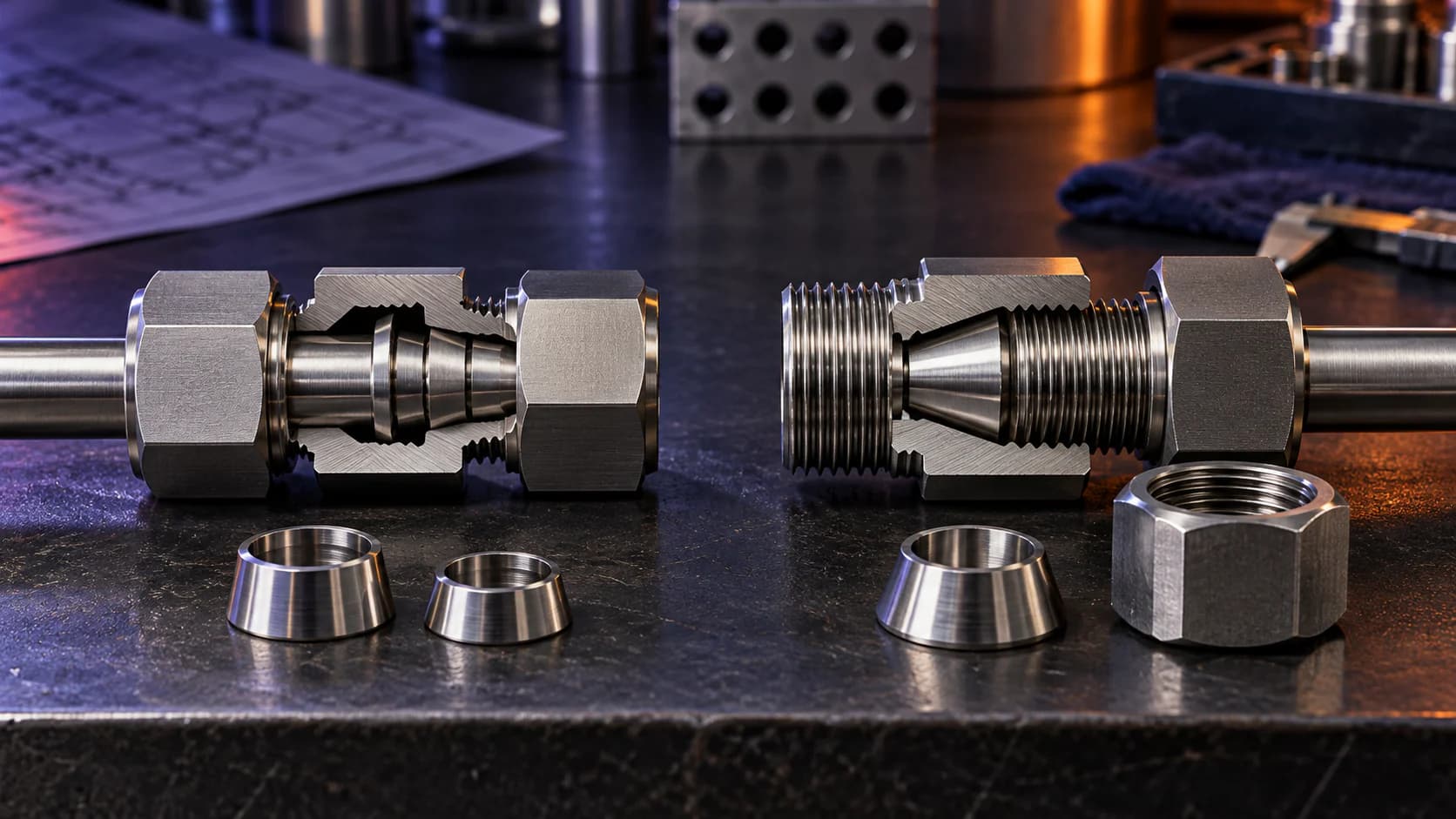
Double-ferrule compression fittings seal via a front and back ferrule that bite into the tube OD when the nut is torqued, creating a metal-to-metal seal without deforming the tube bore. They're widely used for general instrumentation tubing up to moderate-to-high pressure, and can typically be disassembled and reassembled without full replacement, subject to manufacturer guidance.
Cone-and-thread connections seal via a metal cone seat mating against a matching cone in the fitting body, secured by a threaded collar. They're the standard choice for high and ultra-high pressure applications where double-ferrule ratings are exceeded, and generally offer a more robust seal under pressure cycling.
Assembly discipline differs meaningfully: double-ferrule fittings rely on correct initial pull-up (often gauged by a specific number of turns past finger-tight); cone-and-thread connections rely on correct torque and cone/seat condition. Mixing installer habits between the two technologies is a common source of field leaks.
Pressure rating is the primary technical driver for which to specify — cone-and-thread systems generally extend well beyond typical double-ferrule ratings, which is why they dominate in high-pressure sampling, hydraulic and specialty gas-service applications.
Compatibility matters across a system: mixing connection technologies from different manufacturers on the same tube run is not generally recommended without engineering review, since ferrule/cone geometries are not universally interchangeable between brands.
Engineering / Procurement Checklist
What to define before requesting a quotation.
- System design pressure and whether it exceeds standard double-ferrule ratings
- Whether the connection will be repeatedly disassembled/reassembled in service
- Manufacturer and connection-technology consistency across the tube run
- Tube material and wall thickness compatibility with the chosen connection type
- Installer familiarity with the specific assembly procedure for the technology selected