
The Challenge
A hook-up BOM sits at the intersection of instrument datasheets, P&IDs and hook-up drawings — which means it's also where inconsistencies between those documents surface. An RFQ built from an incomplete or unreconciled BOM tends to generate the largest number of clarification cycles of any instrumentation package.
Technical Breakdown
Every line item needs to trace back to a specific hook-up drawing and tag number — generic quantities without tag references make it difficult for a supplier to sanity-check the BOM against the drawing set, or for the customer to verify the quotation later.
Component specification needs to be complete per line, not assumed as "same as previous": material, size, connection type and pressure rating for each fitting, valve and manifold referenced.
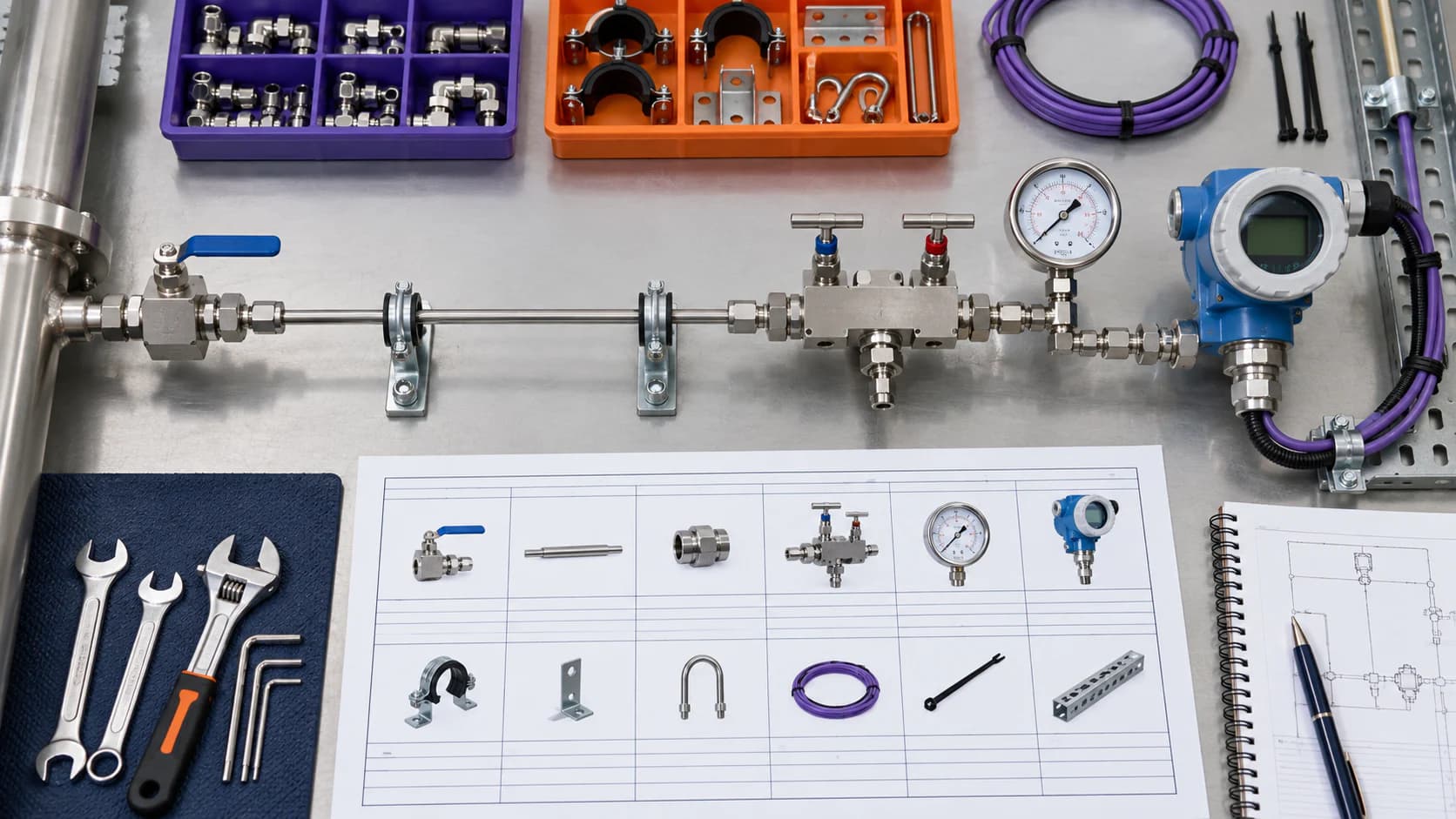
Standard hook-up 'kits' (a defined bundle of fittings, tubing and small-bore components per instrument type) can significantly speed up both quotation and procurement, but only if the kit definition is agreed and consistent across the project rather than re-derived per instrument.
Quantities should reconcile against the actual instrument count and hook-up drawing revision in use — a BOM built against an earlier drawing revision is a common, avoidable source of shortfalls discovered during site installation.
Spares and consumables (spare ferrules, gaskets, fasteners) are often left off the BOM entirely, then requested urgently once installation is underway — including a reasonable spares allowance at RFQ stage avoids that scramble.
Engineering / Procurement Checklist
What to define before requesting a quotation.
- Hook-up drawing set and revision status referenced for each BOM line
- Complete per-line specification: material, size, connection type, pressure rating
- Standard hook-up kit definitions, where used, agreed and consistent project-wide
- Quantities reconciled against current instrument count and drawing revision
- Spares/consumables allowance included, not left for a later urgent request